Gallery Particulier experiments with ways of making visual arts close by and exciting Chicago gallerist Meg Duguid is an inspiration for us.
When Meg Duguid returned to Chicago after five years in New York City, she did something bold and ingenious to show art by Chicago artists in a way that’s accessible and exciting.
Her solution? She created a gallery that fits inside her purse.
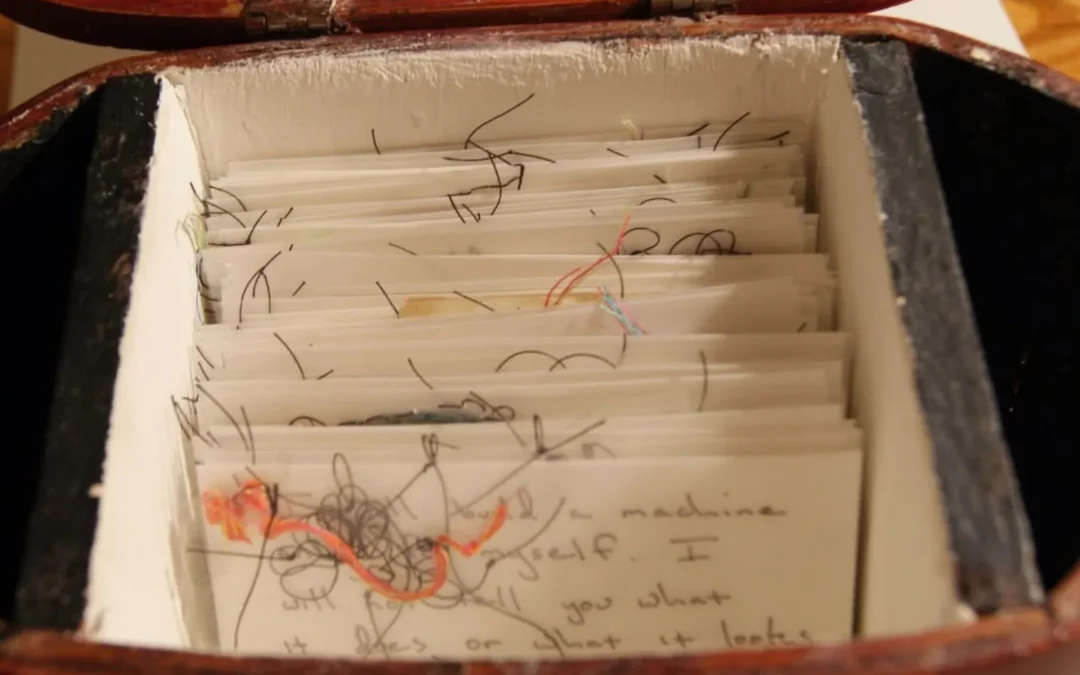
She called it The Clutch Gallery, and it’s exactly what it sounds like: a portable exhibition space tucked inside a handbag. Artists install miniature artworks in the space, and Meg carries the gallery wherever she goes. In one year alone, she hosted an impressive 21 exhibitions.
Recently, Clutch Gallery made an international stop in Belgium’s Lichtekooi Artspace, where it was featured in an exhibition celebrating alternative contemporary art spaces. On its way back to the U.S., it was flagged at customs as potentially dangerous material. Yes, art is dangerous! Art has always had the power to provoke thought, challenge norms, and spark resistance. It took an official affidavit from the Belgian institution to prove that yes, this little box full of ideas was indeed “just” a gallery.
Next, Clutch Gallery is heading to California, where artist Carrie Ohm will be placing her work inside the tiny but mighty space.
Through this clever and radical concept, Meg brings contemporary art to people who might never set foot in a museum or traditional gallery. She’s an out-of-the-box thinker who quite literally puts art in a box.
This spirit of creativity and accessibility is exactly what drives us at Gallery Particulier. We, too, are committed to sharing visual art in unexpected, intimate, and community-centered ways.
And here’s a scoop: Clutch Gallery might be traveling to NYC soon… to collaborate with us! Stay tuned.
Interview with Meg Duguid
What is the Clutch Gallery made from, and what are its dimensions? Did you ever have to build it again?
Clutch is a wooden purse that I purchased on eBay for $5 plus shipping. The purse is about 12″ wide, 5″ tall, and 6″ deep. I have fixed the clasp a few times, but I have never rebuilt it. I have thought the project was over a few times, but now I intend for the project to end when the object truly gives out.
Can you describe a few of the shows. How do you select the artists that show in Clutch Gallery?
When opening Clutch, I initially intended to maintain regular programming through December 2010, but I continued to carry and program it until the end of 2011, believing it would die a fitting and natural death by wearing out from daily use.
While running Clutch, I took on every role within the gallery—I was the preparator, gallery assistant, director, marketing coordinator, and, most importantly, a performer. The space was a true extension of my practice, and I was fortunate that many artists were generous enough to collaborate with me. I exhibited 22 artists across 21 exhibitions, featuring work in a wide range of media including sculpture (both stable and kinetic), painting, video, performance, and installation. I exhibited artist like Judith Brotman, Jason Dunda, Sue Havens, Matt King, Emily Roz, and Carmelle Safdie
By late 2011, however, carrying Clutch began to feel more Sisyphean than Herculean. I had assumed the purse would wear out by then, naturally bringing the project to an end—but it didn’t. So I decided to open it up to others, inviting them to carry and curate it. At that point, Clutch evolved from being a vessel for my own performance practice to becoming a tool that others could use to extend theirs.
For Emma, Clutch became a direct curatorial instrument, enabling her to expand the scope of her practice. Her exhibitions had longer runs, and she even took Clutch internationally, presenting it in Buenos Aires. Paul Hopkin, director of Slow, integrated Clutch into his gallery practice twice. In 2012, he used it to play with the concept of the group show, exhibiting work by seven artists. Later, he used Clutch as a literal extension of Slow, contributing to The Break Age—a multipart project that included three and a half solo exhibitions by Benjamin Zellmer Bellas across four venues: Slow, Modest Contemporary, DO Mus, and Clutch.
Georgina Valverde, of the Society of Smallness, used Clutch as an expansion of her collective, which “explores the potential for small actions to generate creative opportunities for everyone… an antidote in an age of supersizing and overachieving.” Through her lens as a collaborator and museum educator at the Art Institute of Chicago, she broadened Clutch’s scope. She introduced a guest book, added lunchtime lectures at the Joan Flasch Artists’ Book Collection, collaborated with students on projects, and continued to curate regular exhibitions.
Later, Clutch spent a year with Tanner Woodford at the Chicago Design Museum. He curated three design-focused exhibitions, during which Clutch embraced its object-hood in new ways—resting on Woodford’s desk, living under a vitrine in the mall just outside the museum, and even being loaned to members of the Soho House as part of a show by Studio Gang.
Since then, I have made Clutch available for check-out—first in 2020–2021 at Hyde Park Art Center’s Artist Run Chicago 2.0, and again last summer at Lichtekooi Artspace. This shift feels fitting, as the space is now simply available to artists and culture makers of all kinds, with very few restrictions or curatorial expectations
I will be mailing Clutch to Carrie Ohm in California for check out and I can’t wait to see what she does.
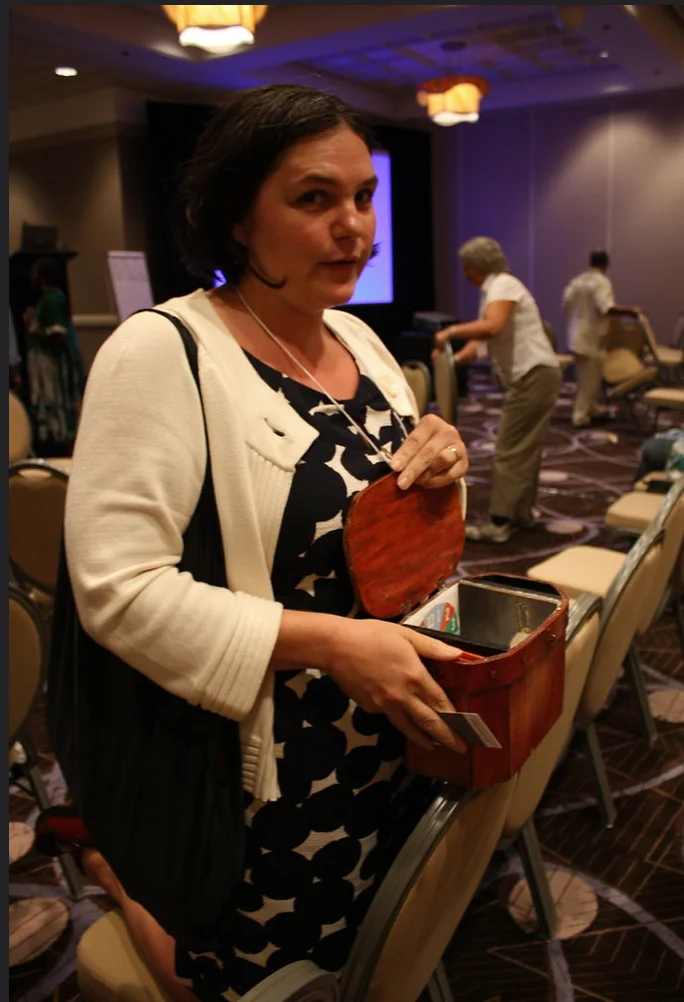
Meg Duguid with her Clutch Gallery
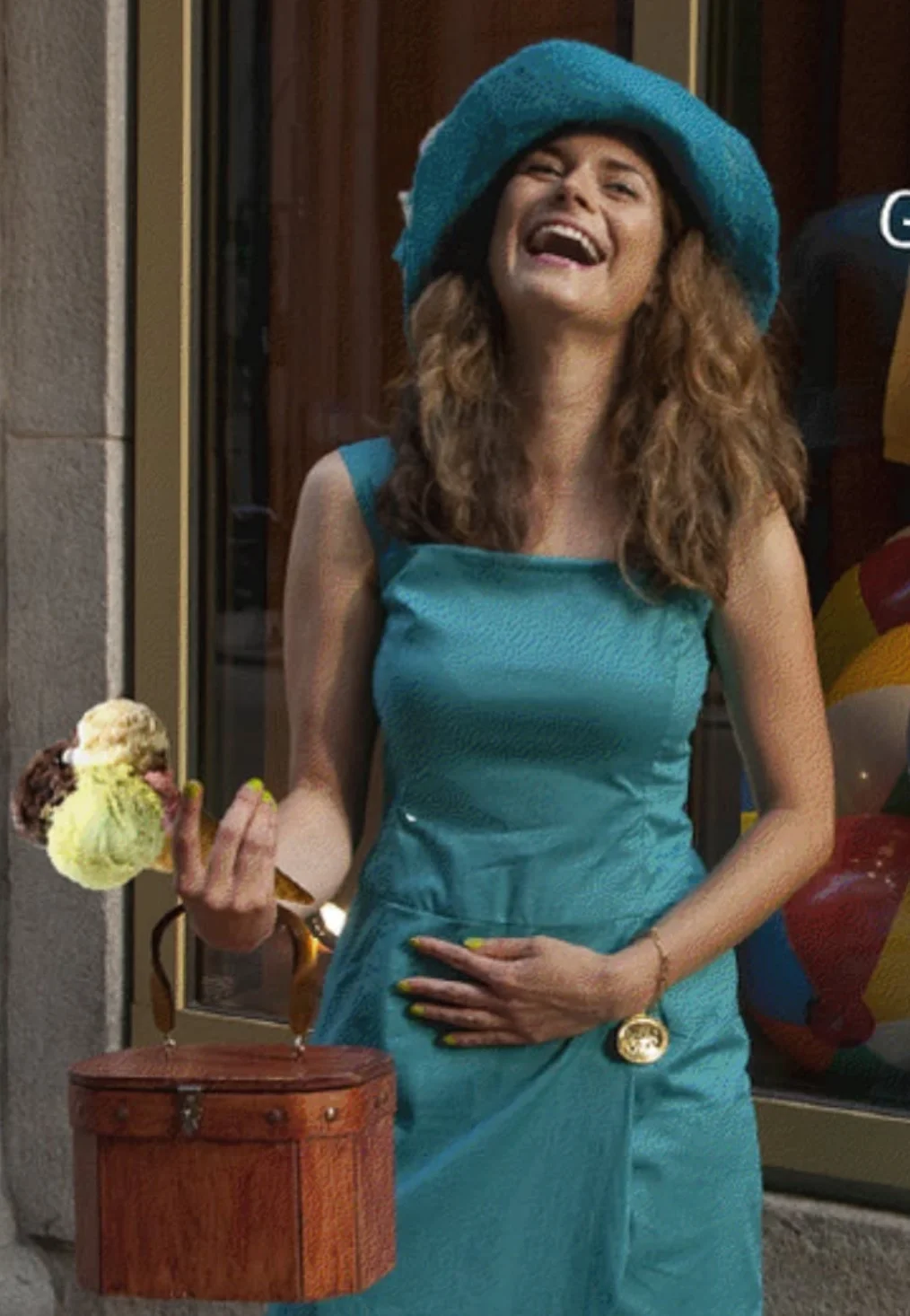
An artist with the Clutch Gallery
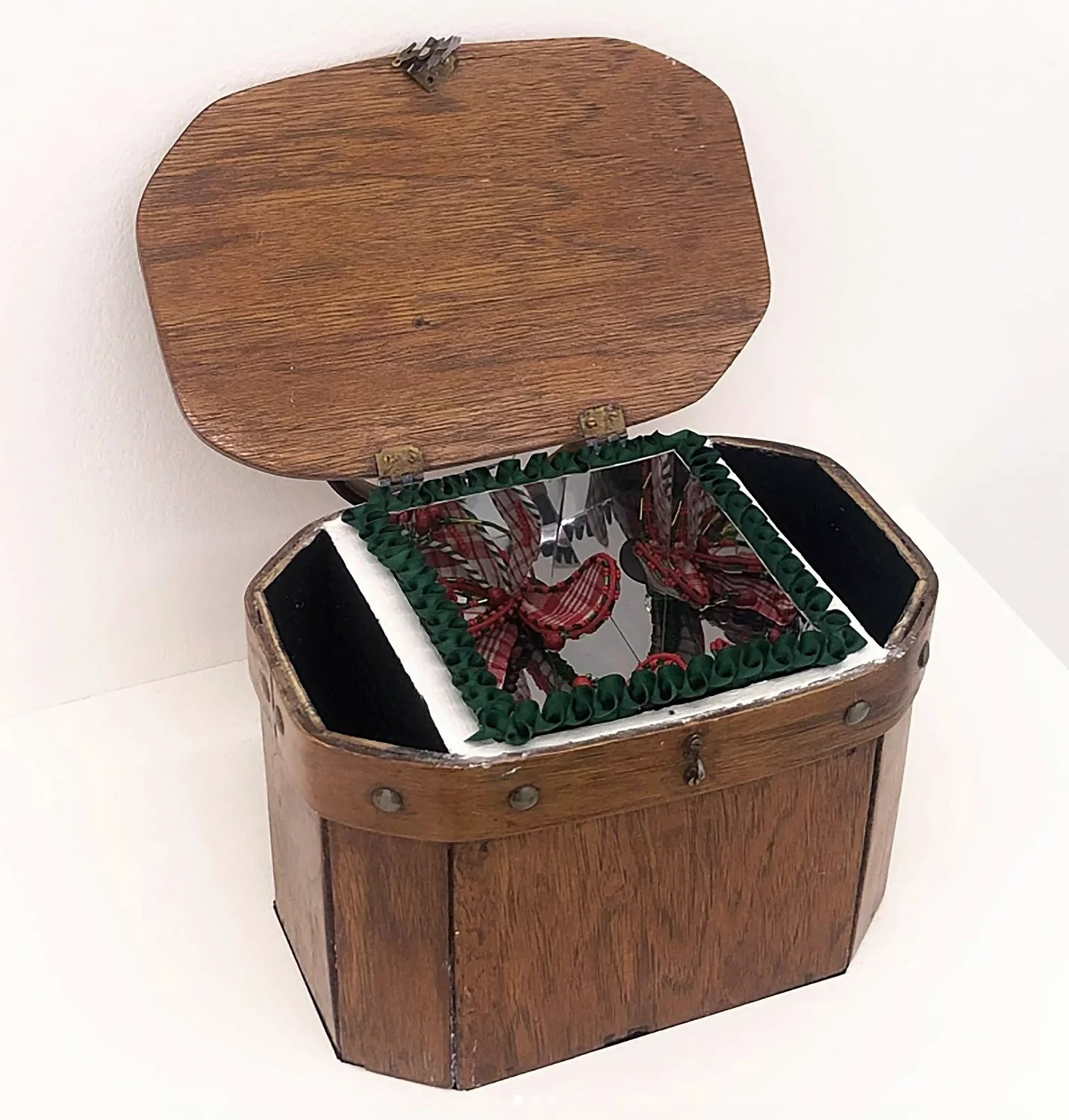
An exhibit in the Clutch Gallery
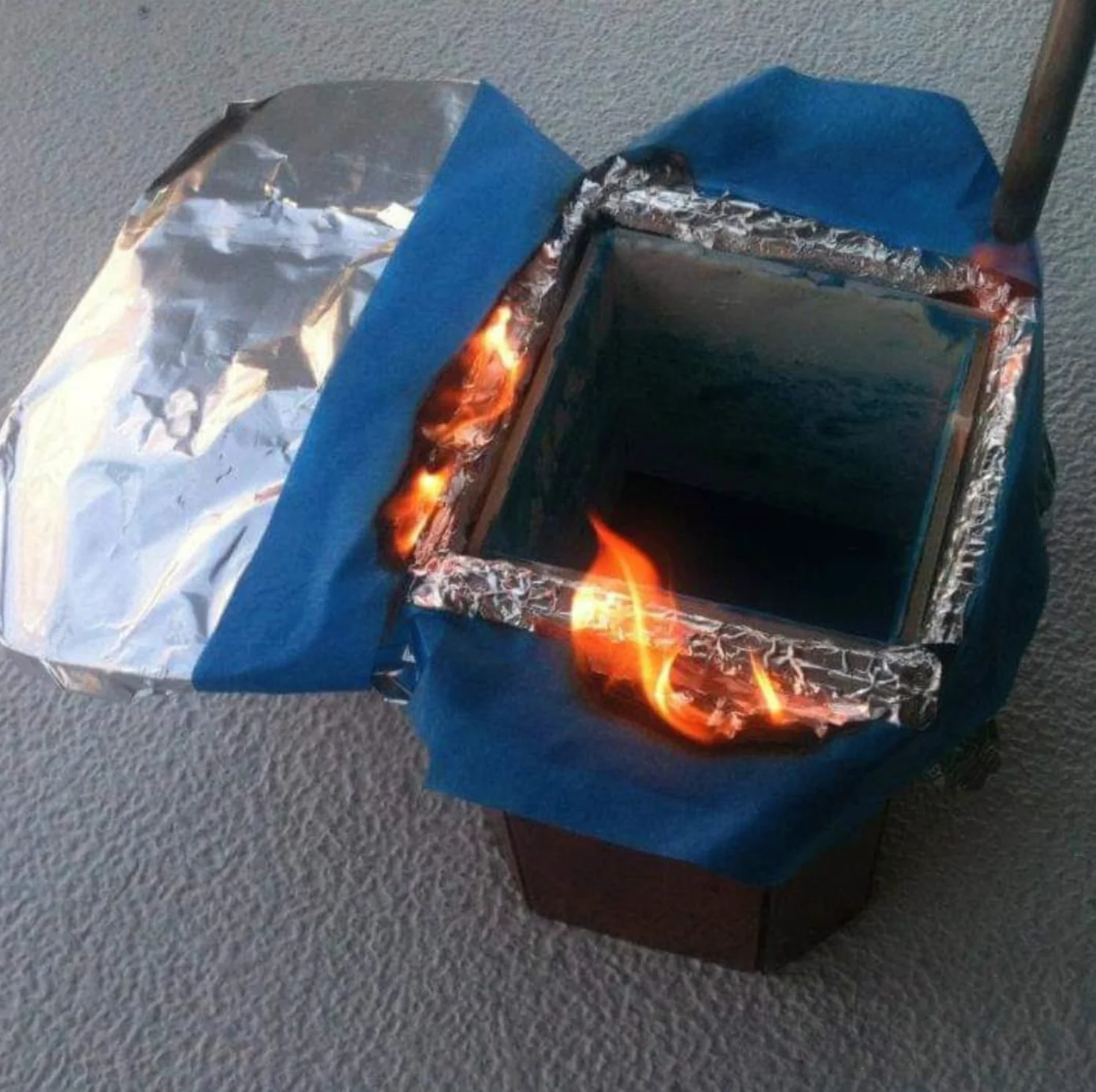
An installation in the Clutch Gallery